


Best Face Wash For Acne – The Complete Handbook For Acne Prone Skin In India
September 14, 2026
Sulphate and Paraben Free Shampoo: A Smarter Approach to Everyday Cleansing
September 22, 2026

Here, traditional Chinese medicine and dermatology actually agree. Pimples on the forehead are rarely just about hygiene. Stress, bad sleep, and a hormone swing – these usually sit behind the breakout before dirt ever does. Why the forehead? Simple. It sits in the T-zone, the part of your face packed with the most oil glands you’ve got. So the first thing your forehead will tell you when something inside you goes out of balance.
To be frank. If you’ve stood in front of the mirror wondering why your forehead won’t stop breaking out no matter which face wash you try, you’re not alone. The causes of pimples on the forehead are almost never one single thing. It’s layered. What touches your skin. What you eat. How much you sweat in a day. What’s happening inside your body in a quiet way.
Here’s something you should know first. Forehead acne doesn’t show up the same way for everyone. Oily skin tends to break out in little clusters of whitehead bumps. Drier skin produces fewer pimples, but deeper ones, the kind that take their time healing. Knowing what you’re dealing with makes all the below easier to actually use.
Hair Products and Hair Oil Clogging Pores
Here’s the kicker. It’s probably your hair routine that’s the biggest contributor to your forehead acting up, and very few people blame it.
Shampoo Conditioner. Gel. Hair oil. All of it sits right against your hairline whether you notice or not. Wash your hair, or oil it before bed, and some of that product runs down and settles on your forehead. Coconut oil, mustard oil, heavy styling creams, these are staples in most Indian homes, and they’re also notorious for clogging pores the second they migrate onto forehead skin.
The truth is, most of these products contain silicones and oils made for hair, not face. They sit in your pores. They catch dirt and dead skin cells. And within a day or two, you have a fresh row of pimples right along your hairline, like a warning sign nobody asked for.
Also worth a mention are heat protectant sprays and dry shampoos. People spray these on the move, rarely thinking about where that mist lands. It settles straight onto the forehead. Slowly. Quietly. The heavier oils accumulate but easier to miss and blame it on something else.
Easy fixes:
- After you have applied hair oil or styling products, wash your forehead separately.
- If you are using leave-in products, then tie your hair back at night.
- Choose hair oils that don’t clog the pores and that are gentle on the skin.
- Keep bangs or fringes away from skin that tends to break out.
- When you are having a shower, make sure to clean your hairline properly, not just the top of your scalp.
Heat and humidity-related breakouts
India’s climate is not kind to skin. In parts of India the heat and humidity are harsh for a long part of the year. This mix is a cause of pimples on the forehead for many Indian skin types. I see sweat combine with oil and dust on skin. When pollution joins, a sticky film forms, on the forehead. That film clogs pores fast. In weather the film stays longer than it would in dry weather. This gives bacteria time to grow before I wash it off at home.
And it’s not just outdoor heat doing the damage. Helmets, caps, long rides in the sun all trap the sweat right up against your forehead. That’s the reason so many people experience worse forehead acne through the monsoon and summer months, and more balanced skin once winter dries the air out and sweat isn’t a full-time job.
Life, inside the house is. Life outside feels like a constant battle. Moving between air‑conditioned rooms and humid outdoor air all day confuses oil glands making oil glands compensate much. Carrying blotting sheets or a light facial mist during the commute really helps, especially when spending hours on a two‑wheeler stuck in city traffic. A pair of blotting sheets and a bottle of mist can keep oil glands calm during the commute.
Pimples Due To Stress And Hormonal Changes
This one comes full circle back to where we began. Stress triggers cortisol, cortisol ramps up oil production, and more oil means more clogged pores. You already have oil glands stacked up on your forehead, and it tends to be the first place you notice it.
Hormonal changes work just the same way. Puberty. Your period. PCOS Even a stretch of bad sleep. Any one of these can send your oil glands into overdrive. This makes stress and hormones one of the more internal causes of pimples on forehead, and it’s one that people underestimate all the time, especially in cases when their skincare routine already looks good on paper.
The honest truth is that no serum or face wash can fix a hormonal imbalance. If you’re breaking out on your forehead despite a clean routine and it’s showing up along with irregular periods, extra facial hair, or sudden weight changes, get your hormone levels checked instead of switching products again.
Sleep deprivation gets its own paragraph here, and it deserves one. Reducing sleep increases cortisol like persistent stress. It also slows down the speed of how quickly your skin repairs overnight. So two rough nights before a deadline can genuinely show up on your forehead by the end of the week. That blows. It’s not fair. But that is the way the body is.
Poor Hygiene and Sweat Build-up
This is the most talked about because here and for good reason. But it’s seldom “Wash your face more.” Poor hygiene is usually hidden in little daily habits that no one thinks twice about.
| Habit | Why It Causes Breakouts |
| Touching your forehead oftentimes | Transfers oil and bacteria from hands to skin |
| Not washing pillowcases regularly | Pillow fabric traps oil, dust, and dead skin. |
| Wearing sweaty caps or helmets for hours | Sweat gets trapped against the skin, clogging pores. |
| Skipping face wash after workouts | Sweat and bacteria sit on skin for hours. |
| Using dirty makeup brushes or sponges | Bacteria buildup transfers directly to skin. |
None of these habits feel like a big deal on their own. But they accumulate for weeks. If your forehead is still breaking out and your face wash routine looks great on paper, check these smaller habits before blaming your skincare shelf.
Phone screens get a mention too, mostly hitting cheeks and jawline. Even so, resting your phone against your hairline during long calls or wiping sweat off with the back of an unwashed hand are habits worth ditching regardless.
Wrong Products for Skin and Over-Washing
It’s ironic, but working too hard can work against you. Some dermatologists say that washing your skin too often removes the natural oils, which causes your glands to produce more oil. It’s worth knowing, though, that the “rebound oil” theory is a real point of debate among skincare scientists, some of whom say that skin doesn’t behave quite so predictably. What isn’t debatable is that washing more than twice a day breaks down your skin barrier. And a damaged barrier is still a valid cause for forehead pimples, rebound oil or not.
The same logic applies to selecting the wrong products. Heavy oil-based moisturisers and thick sunscreen. Deep cleansing, harsh scrubs. All of it can do more harm than good here. Skin needs balance, not aggression.
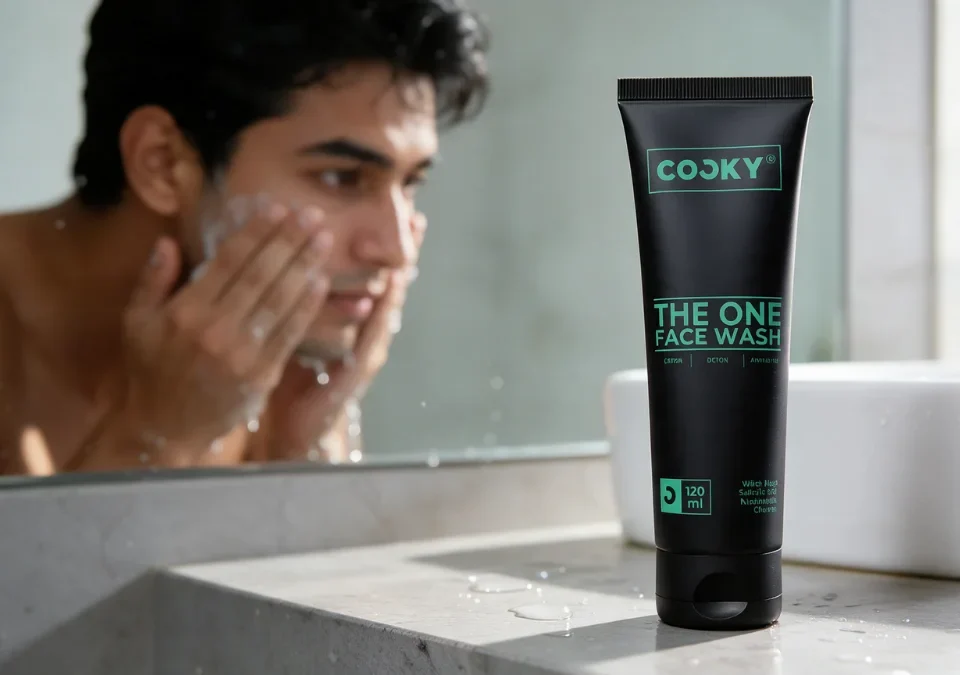
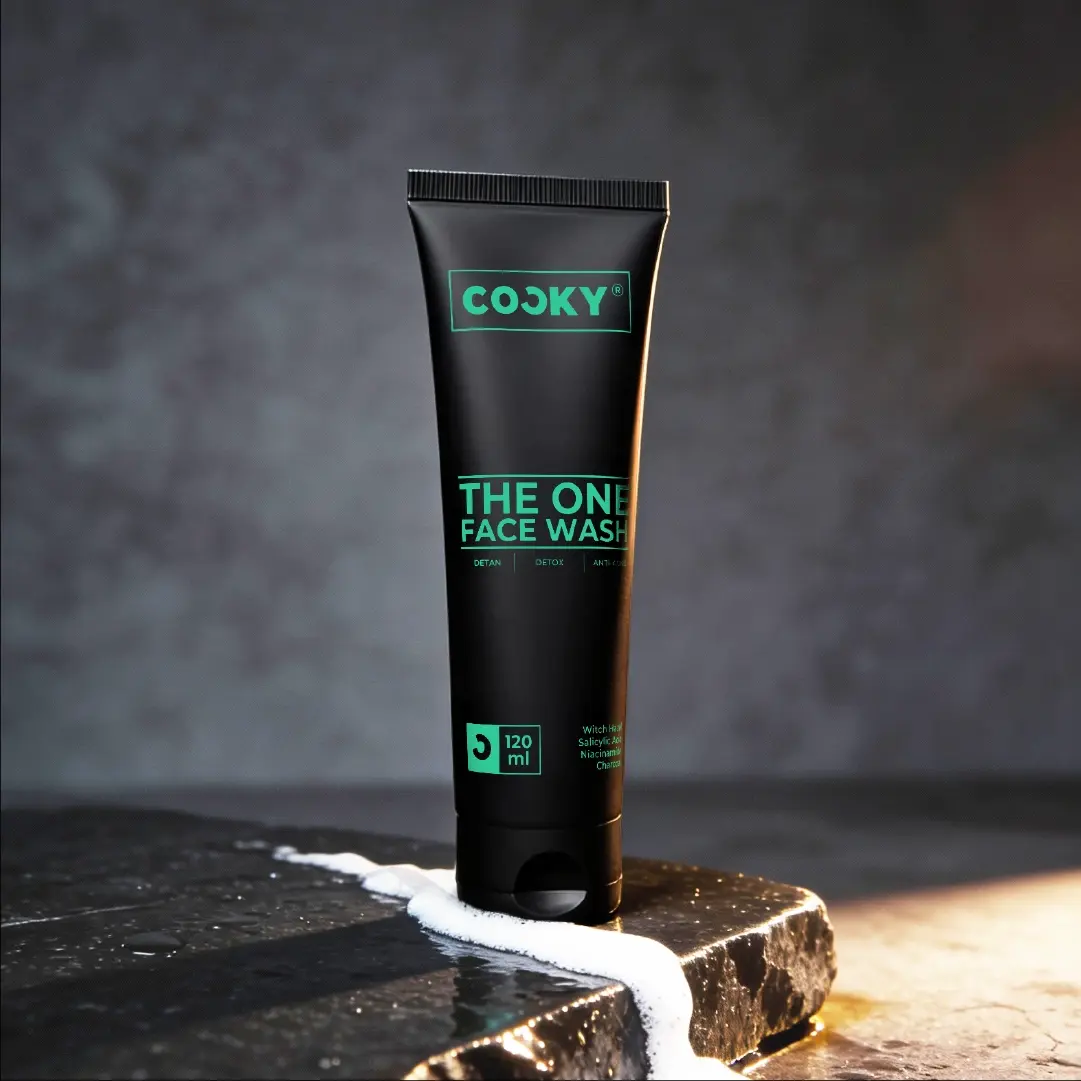
This is where actually reading your ingredient list matters. Look for mild, non-comedogenic formulas. This is precisely why CockyLife has embraced niacinamide-based products like, The One Fash Wash that has niacinamide, which helps regulate oil production without stripping your skin, which is a huge bonus when your forehead is already a breakout magnet.
CockyLife keeps their formulations simple and straightforward if you’re looking to keep things simple on your skincare shelf. And that’s a consideration when your forehead skin is already reacting to too many products piled on top of each other.
Patch-test anything new. Just wait a day or two. Then apply it across your whole forehead. Reactive skin takes its time showing irritation, so throwing three new products into your routine in the same week makes it nearly impossible to tell which one actually caused the breakout.
Don’ts:
- Washing your face more than twice a day
- Toner with a lot of alcohol
- Thick, oil-based sunscreens
- Physical scrubs with rough, gritty particles
- Using multiple new products in one week
Diet and Dairy: How Food Triggers Forehead Acne
Food does not cause pimples. But it can certainly make things worse. Several studies have linked dairy, especially milk, to increased acne activity. “It is thought that hormones naturally found in milk promote extra oil production, and for some people that manifests as oiliness specifically on the forehead.
Foods with a high glycaemic index work on the same principle. White rice, sugary snacks, and refined flour – all of it spikes your blood sugar fast. That spike triggers insulin, and insulin ramps up oil production. It is a chain reaction. And your forehead takes the brunt of it before any other place.
One of the direct causes of pimples on forehead isn’t usually diet alone. But it can tip the scale when everything else is already borderline. For some, a poor diet quietly becomes the root cause of why nothing they put on their skin works.
It by no means means that you should get rid of all samosas or all glasses of milk. However, if you’ve tried all the other things and your forehead still fails to clear, you could keep a food diary for a couple of weeks. As a result, you might pick up on some patterns that you never expected.
Hydration is also a frequent topic in this discussion. In reality, there is less scientific evidence on it than most people think. Some small studies indicate that drinking more water might mildly improve skin hydration, but the evidence is weak that it has a direct effect on reducing oil production. So far, nothing definite has been established. It is still beneficial for the skin as a whole to remain hydrated, though you shouldn’t expect it to magically cure an oily forehead.
But What Really Works?
Figuring out why your forehead breaks out is one thing. Another is fixing it. The reality is most people need to be working on two or three fronts at the same time. Not one.
Begin with your hair care routine because hair care routine is the step. Next focus on hygiene; hygiene changes are small. Can add up quickly. If breakouts keep happening even though your skin still feels clean it may mean that hormonal or stress‑related triggers are still active. In that case you might need help maybe from a dermatologist.
I recommend simplifying your skin routine because a simple skin routine works best. Use a cleanser and a light moisturiser. Add ingredients like niacinamide; niacinamide helps control oil without irritating skin. That is why CockyLife’s approach to men’s skincare keeps formulas straightforward and non‑aggressive, rather than piling on harsh actives.
Patience is more important than most people realise. Skin regenerates itself in four to six weeks. So switching products every day and judging results too soon is one of the most common reasons a routine feels like it’s “not working” when it just needs time.
FAQs
Let me tell you what’s happening. The skin on your forehead produces more oil than other areas of your face. That’s because there are oil glands there. When you add in hair product residue, sweat and stress it creates the storm for breakouts. That’s why you might have cheeks and a chin, but your forehead is always breaking out.
There’s a theory that says certain spots on your face reflect problems with your liver, digestion or even your gut. Science doesn’t back that up. Doctors and dermatologists don’t see a link between acne in one spot and a specific organ. What they do know is that hormones, excess oil and things like hair gels or oils rubbing against your skin can cause trouble.
That depends. If acne is mild improvement generally appears after four to six weeks when a consistent skincare routine is followed. If acne is deeper perhaps linked to hormones, or stress improvement may take longer. In those situations stronger treatments or medical advice may be needed, along with changes in diet. Patience is essential, and sticking with a routine that works for acne is key.