
Dark Spots On Face Causes: A Practical, Science-Led Guide For Men
February 17, 2026
Chocolate for Your Skin’: The Serum That Lights Up the Brain Like a Bar of Dark Chocolate
July 7, 2026
- Oxytocin is a natural hormone released during moments of connection that helps reduce stress and promote calm.
Oxytocin is the chemical your brain releases during a hug. A face serum claims to raise it by up to 65% — and has the lab work to argue the point. We looked.
Somewhere in your body, right now, a single molecule is doing quiet, outsized work on your mood. Oxytocin — nicknamed the ‘happiness molecule’ or ‘bonding hormone’ — is the chemical your brain releases during a hug, a shared laugh, a moment of trust. It softens stress, warms your sense of connection and, in small everyday doses, makes life feel a little more bearable. Now a serum sold in India claims it can raise that molecule by as much as 65% — not with a hug, but with three drops on your face.
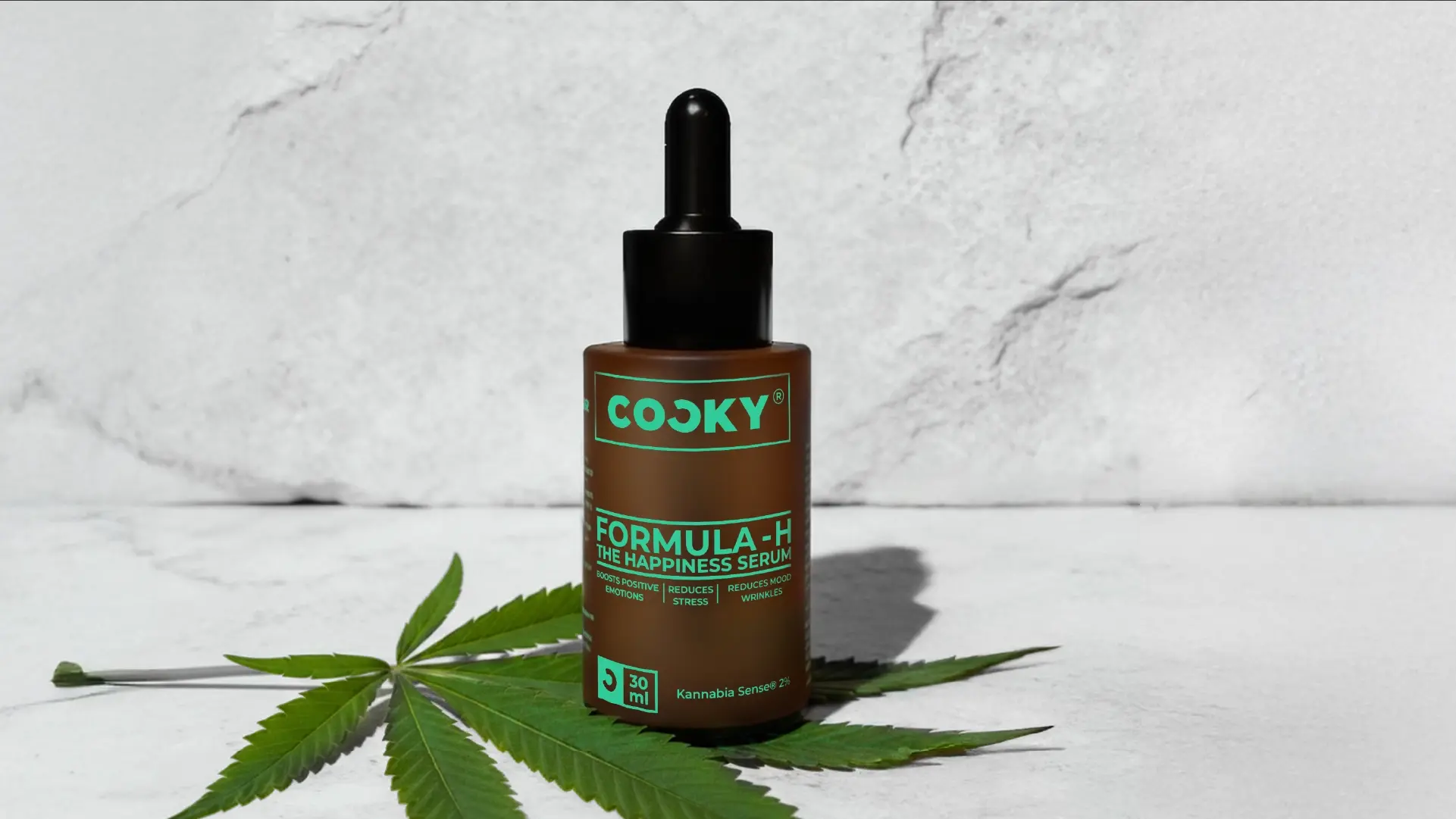
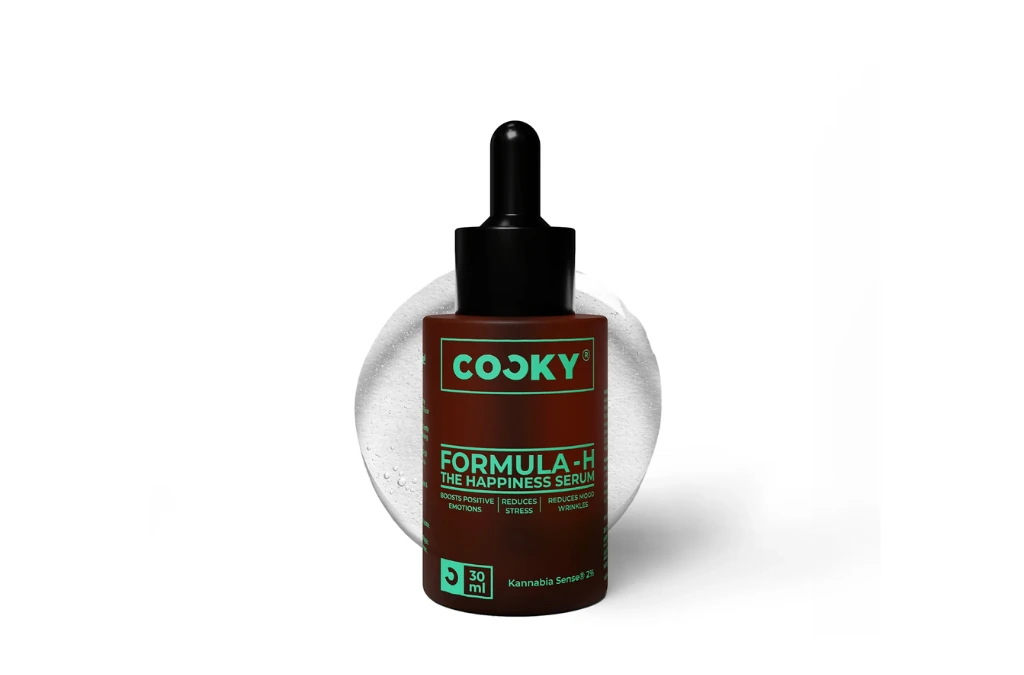
The product is Formula H, billed as the country’s first “neurocosmetic,” and the claim rests on its active ingredient, a Spanish compound called Kannabia Sense™. In laboratory tests, the ingredient is reported to lift oxytocin production in skin cells by up to 65% — and, through a knock-on effect, by several times more. It sounds implausible until you follow the biology. So we did.
The category is novel enough to have earned write-ups from Business Standard to The New Indian Express. The number at its centre, though, comes from the ingredient maker’s own clinical dossier — which is exactly where a curious, supplement-literate reader would want to start.
Meet your happiness molecule
Oxytocin is best known as the hormone of closeness. Your body releases it during touch, warmth and connection; it lowers the sense of threat, nudges you toward trust and calm, and quietly counter-balances the stress hormone cortisol. People chase that feeling in all sorts of ways — exercise, company, a square of dark chocolate. The intriguing question Kannabia Sense™ raises is whether you can prompt some of it from the outside, through the skin.
How a serum raises it
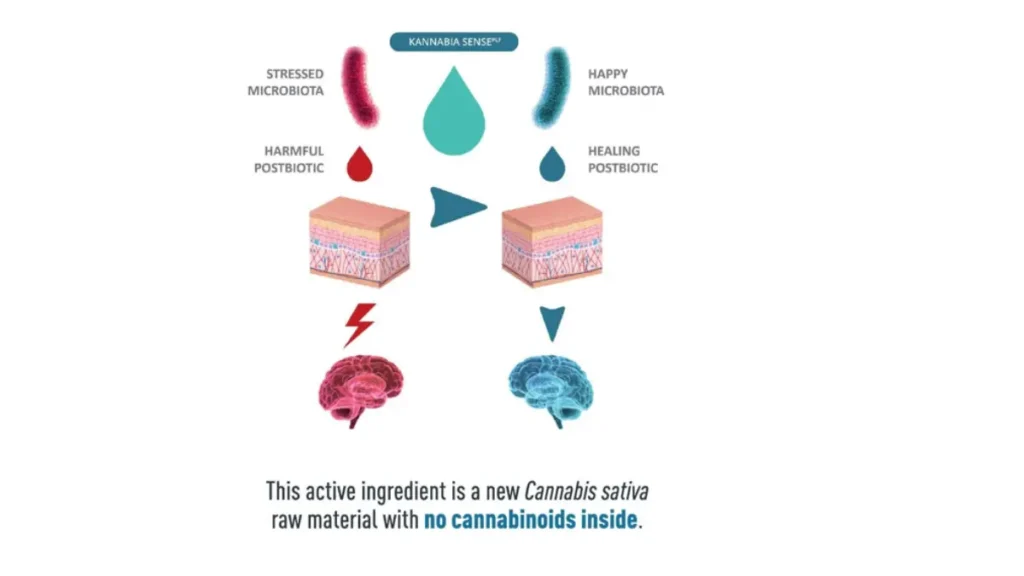
The route is indirect and rather elegant. Kannabia Sense™, developed by the Spanish biotech Vytrus, is not absorbed like a drug. It behaves like a prebiotic — food for the friendly bacteria already living on your face. Fed with it, those microbes shift from a ‘stressed’ to a ‘happy’ state and produce a different set of by-products, or postbiotics. Those signals prompt your own skin cells to make oxytocin, which then travels the skin-to-brain axis to the brain’s pleasure centres. You are not applying oxytocin; you are coaxing your body to make more of its own.
The 65% — and then some
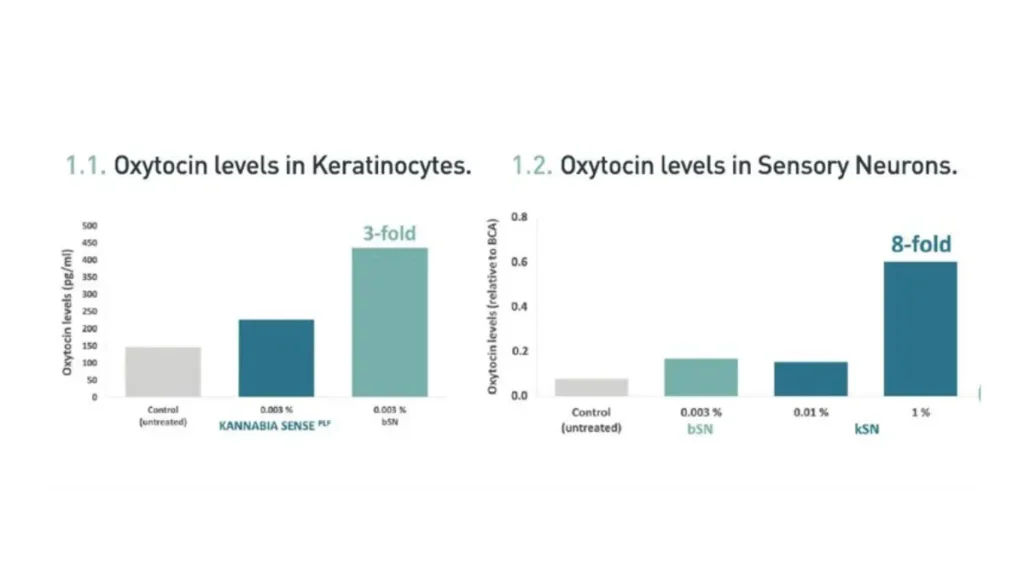
In cell studies, the effect was not subtle. Applied directly to human skin cells (keratinocytes), Kannabia Sense™ raised oxytocin production by up to 65%. Through the postbiotic it triggers, the increase went further still — roughly three-fold in skin cells and as much as eight-fold in sensory-neuron models. In plain terms: the ingredient doesn’t merely tickle the happiness molecule; it appears to open the tap.
“You are not applying oxytocin — you are coaxing your body to make more of its own.”
From skin to brain
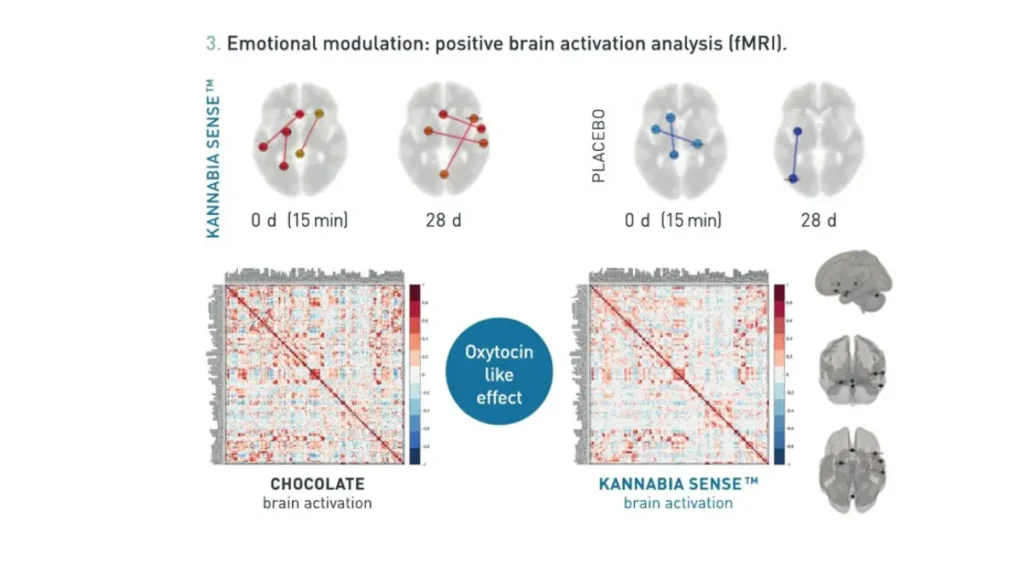
More oxytocin in a dish is one thing; a response in a living brain is another. So the ingredient was put through a functional-MRI study, imaging 132 brain regions before and after use. Within about fifteen minutes of a single application, pleasure-linked areas — the amygdala, hippocampus and insular cortex — lit up, in a pattern researchers described as ‘oxytocin-like.’ Placebo did comparatively little.
Did people actually feel it?
Molecules and scans are persuasive; feelings are the real test. In a 28-day double-blind, placebo-controlled trial, volunteers chosen for being stressed — screened by questionnaire and by elevated cortisol — used the active daily. They reported up to 29% more positive emotions (optimism, joy, cheerfulness, happiness) and described themselves as more relaxed, happier and more confident than the placebo group. Their skin came along for the ride: hydration up by more than half, the stress-etched ‘mood wrinkles’ around the brows and mouth reduced, and radiance improved by about a fifth.
But isn’t this… cannabis?
No. Kannabia Sense™ is derived from Cannabis sativa stem cells but is guaranteed free of THC and CBD — no cannabinoids, nothing to get you high, nothing you swallow. It is a topical cosmetic; the cannabis link is about plant-cell chemistry, not the plant’s reputation.
So, can you raise happiness from the outside?
Some discipline is in order. A 65% rise in oxytocin in a lab dish is a striking result, but it is a result on the ingredient, not a promise for any one person, and Formula H is a cosmetic — not a medicine, and no replacement for sleep, movement, connection or professional help where those are needed. Mood is complicated; no serum rewrites a hard season. What the evidence does suggest is more modest and genuinely interesting: that a well-made topical can measurably nudge your own feel-good chemistry, and do proper skincare while it is there. As with any of the small rituals people use to feel better, the fair test is a consistent one — the studies ran 28 days, and so should you.
Formula H, the Indian serum built around Kannabia Sense™, is a 30 ml neurocosmetic available at only ₹999 cockylife.com.
Scientific figures and images in this article are reproduced from the Kannabia Sense™ technical dossier and clinical summaries (Vytrus Biotech, Spain). Formula H is a cosmetic product; the figures refer to independent studies on the active ingredient and individual results may vary. It is not a medicine and is not intended to diagnose, treat, cure or prevent any disease.