Happiness Molecules, Up 65%: The Curious Science of a Serum That Raises Oxytocin Through Your Skin
July 2, 2026
The ‘Happiness Serum’ Going Viral in Indian Homes, and the Neuroscience Behind It
July 10, 2026
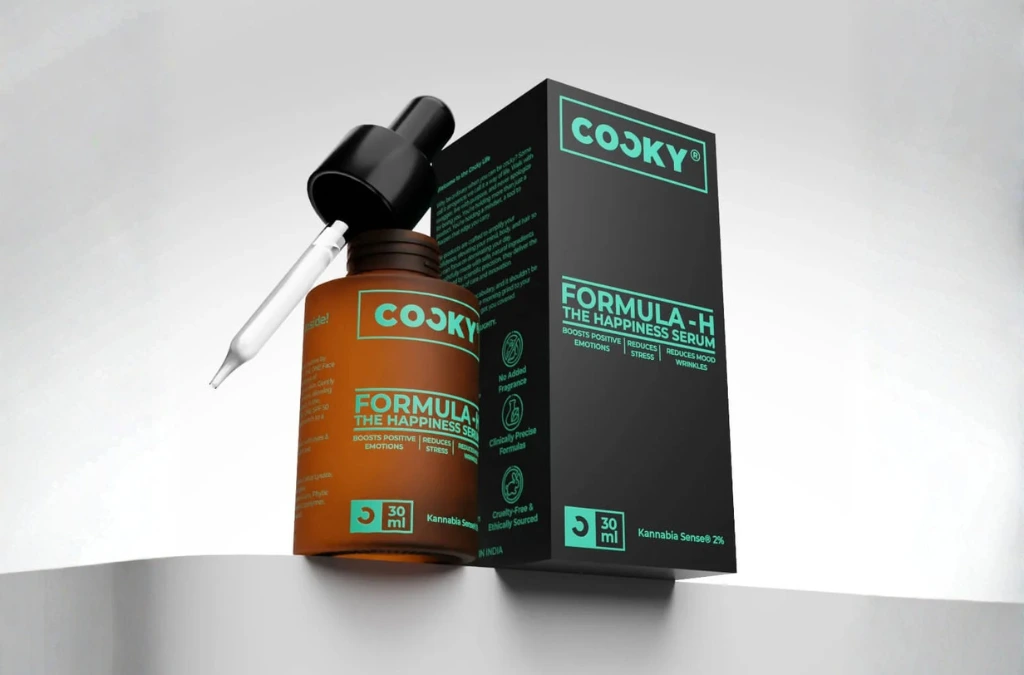
- Formula H is an Indian face serum marketed as the country’s first neurocosmetic.
Scientists put a face serum and a piece of chocolate in the same brain scanner. What came back explains why a small Indian bottle keeps getting called ‘chocolate you wear.’
There is a reason the first thing many of us reach for after a terrible day is chocolate. It isn’t only the sugar. A good piece of dark chocolate sets off a small chemical celebration in the brain — a nudge to the pleasure circuitry, a little rise in the feel-good signalling that briefly makes the world more manageable. Now imagine getting a version of that nudge from three drops of a face serum, minus the sugar, the calories and the 4 p.m. crash.
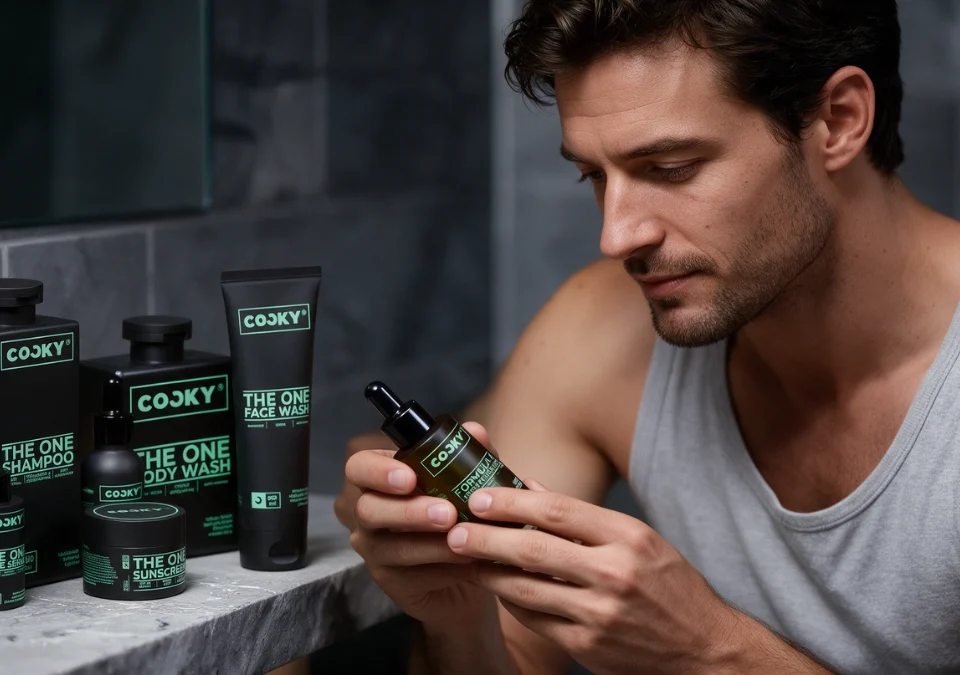
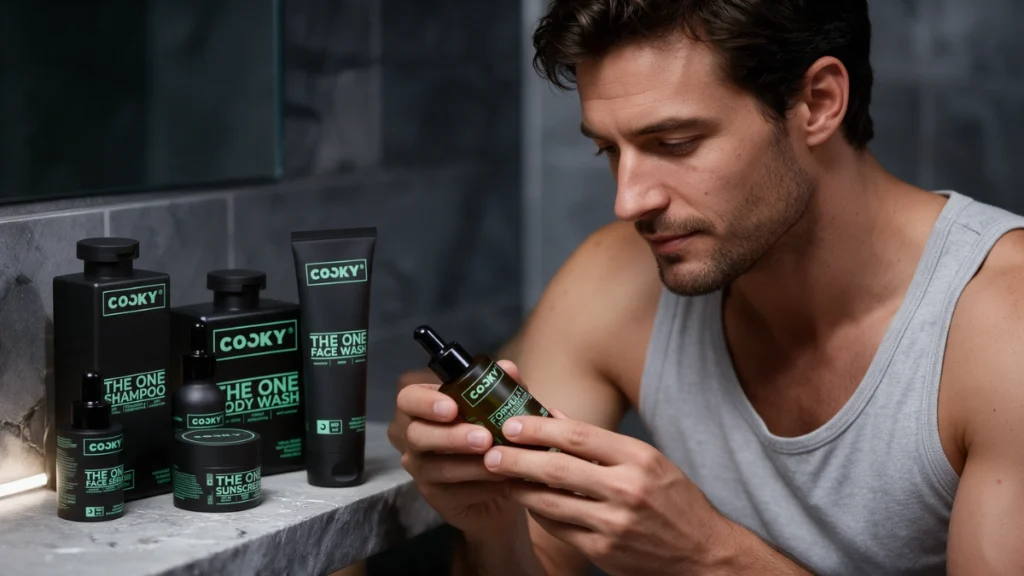
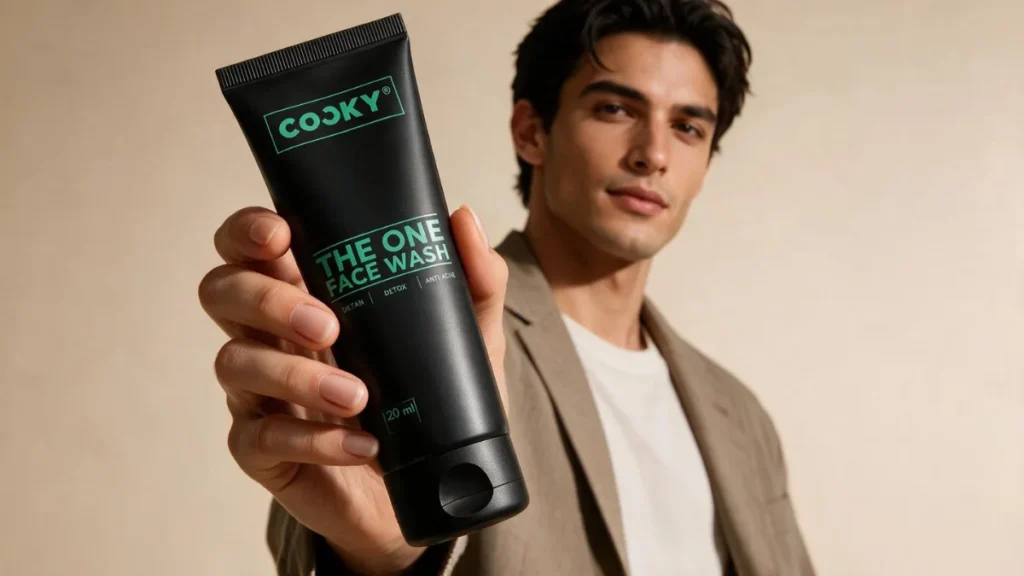
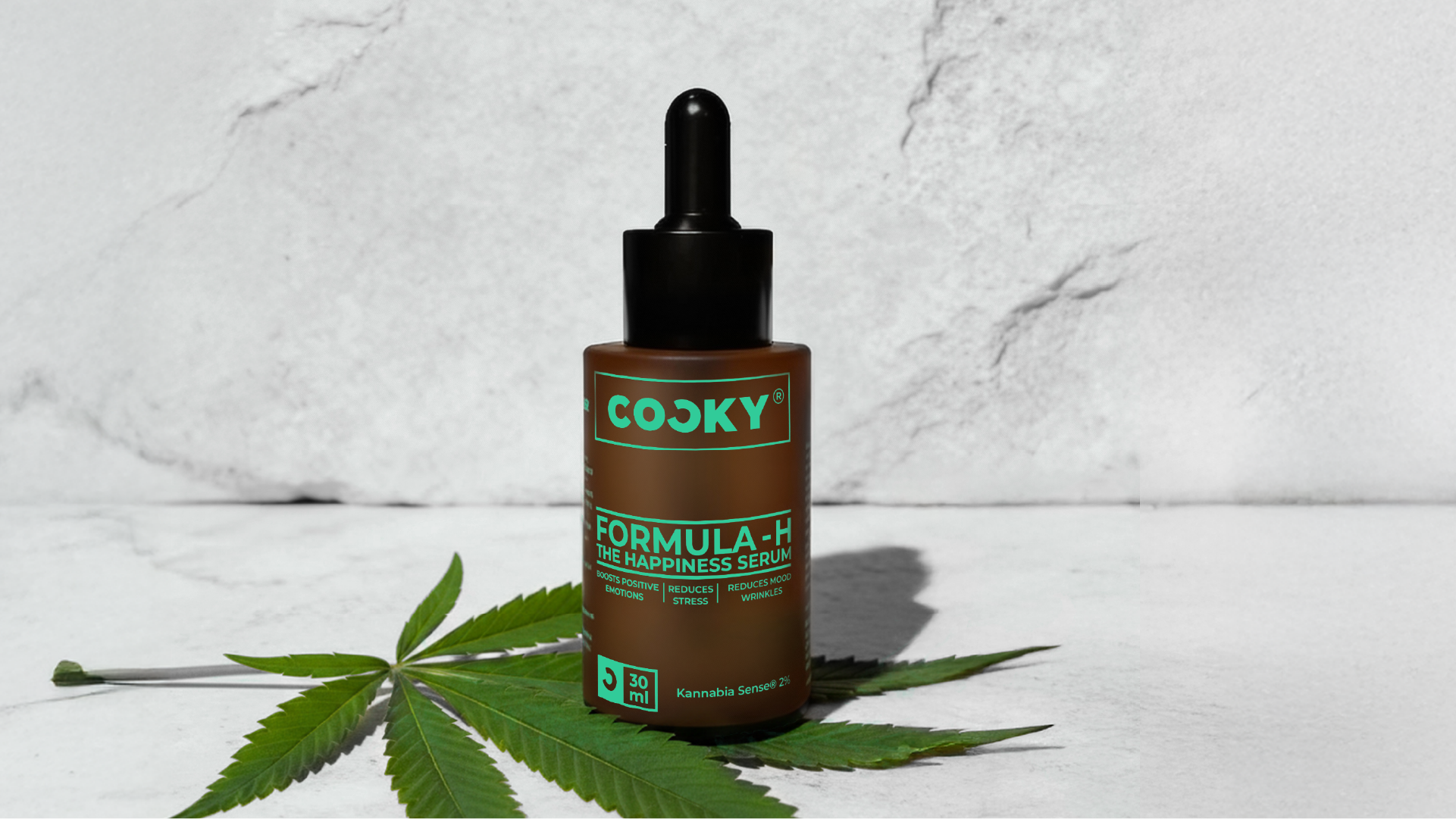
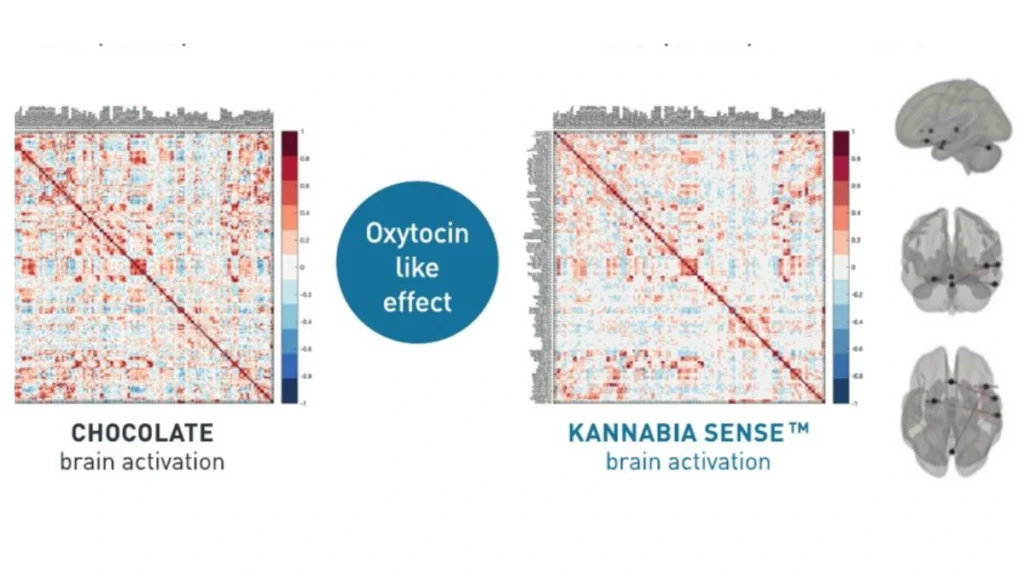
That is, more or less, the pitch behind Formula H — an Indian serum marketed as the country’s first “neurocosmetic.” It sounds like a stretch until you see where the comparison comes from: in a brain-imaging study, scientists measured how the serum’s active ingredient, Kannabia Sense™, lit up the brain — and set the result beside the brain’s response to chocolate. The two patterns looked strikingly alike. Hence the line now doing the rounds online: it’s chocolate for your skin.
The category is new enough that the launch has drawn coverage from Business Standard to The New Indian Express. But the chocolate comparison isn’t a copywriter’s flourish — it is lifted straight from the ingredient maker’s own clinical dossier. So it’s worth understanding what is actually going on.
Why chocolate makes you feel good
When you eat chocolate, the pleasure is partly chemical. It nudges the brain’s reward and bonding systems — the same circuitry linked to oxytocin, the ‘feel-good’ molecule your body releases during warmth, touch and closeness. That is the quiet lift behind the cliché. The catch, of course, is everything that comes with it: sugar, calories, and a mood that dips again once the hit fades.
The serum that borrowed the trick
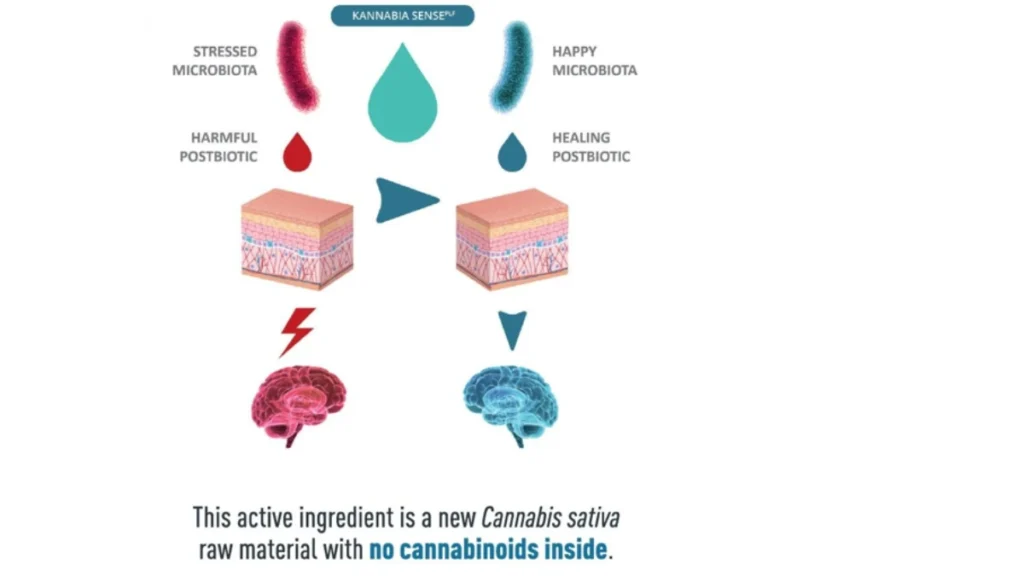
Kannabia Sense™, made by the Spanish biotech Vytrus, reaches the same pleasure circuitry by a very different route — through your skin. It is not absorbed like a drug. It works more like a prebiotic, feeding the friendly bacteria already living on your face. Fed with it, those microbes shift from a ‘stressed’ to a ‘happy’ state and produce different by-products, or postbiotics. Those signals prompt skin cells to release oxytocin, which then reaches the brain’s pleasure areas. Chocolate takes the mouth-to-brain route; this one takes the skin-to-brain route.
“The two brain maps looked strikingly alike — the serum’s effect, the scientists wrote, was ‘oxytocin-like.’”
The brain scans, side by side
Here is the image that started the chocolate talk. In a functional-MRI study, researchers imaged 132 brain regions and compared the whole-brain activation produced by chocolate with that produced by Kannabia Sense™. The maps are remarkably similar — enough that the scientists described the serum’s effect as ‘oxytocin-like.’ With the serum, pleasure-linked regions — the amygdala, hippocampus and insular cortex — began responding within about fifteen minutes of a single application. Placebo did little by comparison.
The oxytocin, by the numbers
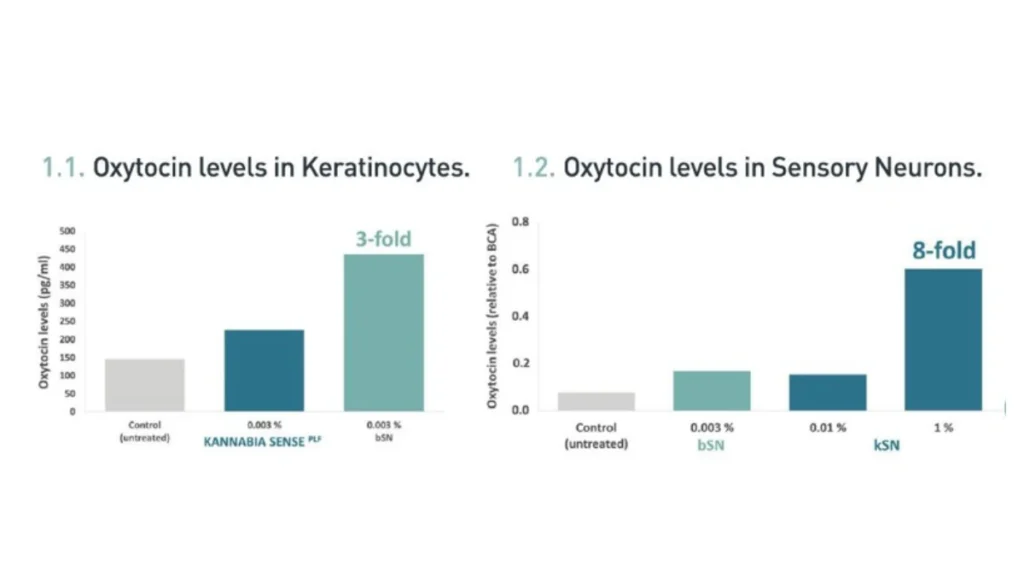
Cell studies show why. Applied to human skin cells, Kannabia Sense™ roughly tripled oxytocin production; in sensory-neuron models, the postbiotic-driven signal raised it as much as eight-fold. In other words, the ‘chocolate feeling’ here is not a metaphor for taste — it is a measurable rise in the very molecule chocolate is loved for nudging.
No sugar, no crash — and it does skincare
The obvious appeal of a chocolate substitute you wear is what it leaves out: no sugar, no calories, no slump afterward. But the serum also does a day job chocolate can’t. In a 28-day double-blind, placebo-controlled trial on stressed volunteers, those using the active reported up to 29% more positive emotions and described themselves as more relaxed and confident. Their skin, meanwhile, drank it up: hydration rose by more than half, the stress-related ‘mood wrinkles’ around the brows and mouth shrank, and radiance improved by roughly a fifth.
But isn’t this… cannabis?
Worth heading off: no. Kannabia Sense™ is derived from Cannabis sativa stem cells, but it is guaranteed free of THC and CBD — no cannabinoids, nothing to get you high, nothing you swallow. It is a topical cosmetic. The cannabis link is about plant-cell chemistry, not the plant’s reputation.
So, is it really ‘chocolate for your skin’?
As a headline, it’s fair — and, unusually, backed by a brain scan. As a promise, keep expectations calibrated. These are results from studies on the ingredient, not a guarantee for any one person, and Formula H is a cosmetic, not a medicine or a mood cure. No serum — and no chocolate bar — fixes a genuinely hard week. What the evidence suggests is gentler and more interesting: that a well-made topical can tilt the skin-to-brain conversation toward calm, give you a small daily lift, and do proper skincare while it is at it. Like the good chocolate you keep for bad days, the trick is using it consistently — the studies ran 28 days, and so should you.
Formula H, the Indian serum built around Kannabia Sense™, is a 30 ml neurocosmetic, available at only ₹999 cockylife.com.
Scientific figures and images in this article are reproduced from the Kannabia Sense™ technical dossier and clinical summaries (Vytrus Biotech, Spain). Formula H is a cosmetic product; the figures refer to independent studies on the active ingredient and individual results may vary. It is not a medicine and is not intended to diagnose, treat, cure or prevent any disease.