Chocolate for Your Skin’: The Serum That Lights Up the Brain Like a Bar of Dark Chocolate
July 7, 2026
Best Sunscreen for Men: The Daily SPF Upgrade You Can’t Afford to Skip
July 14, 2026
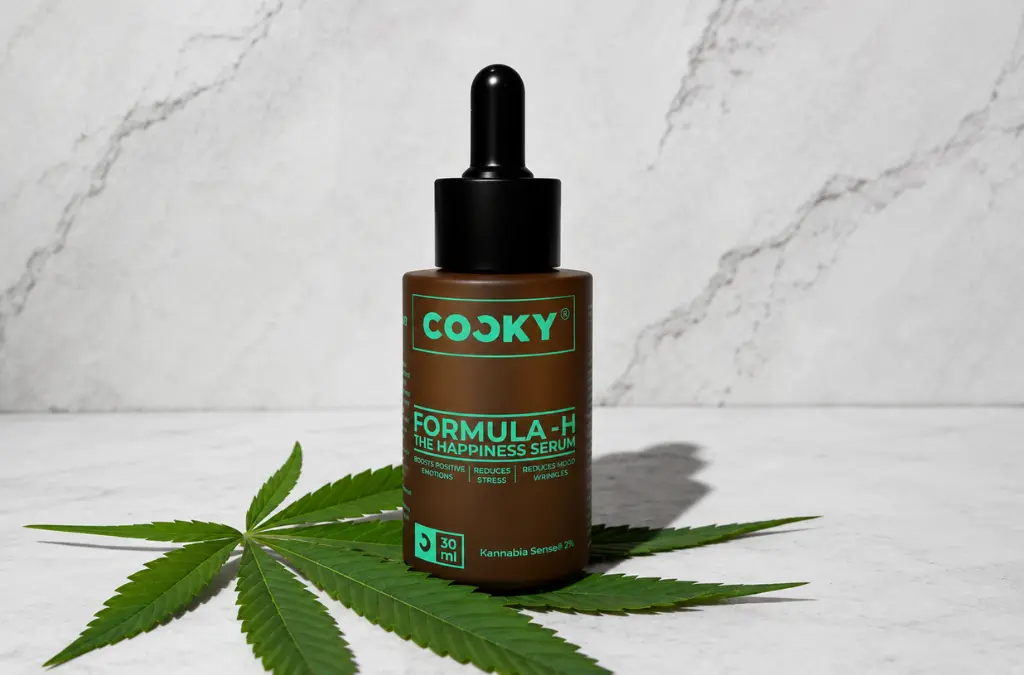
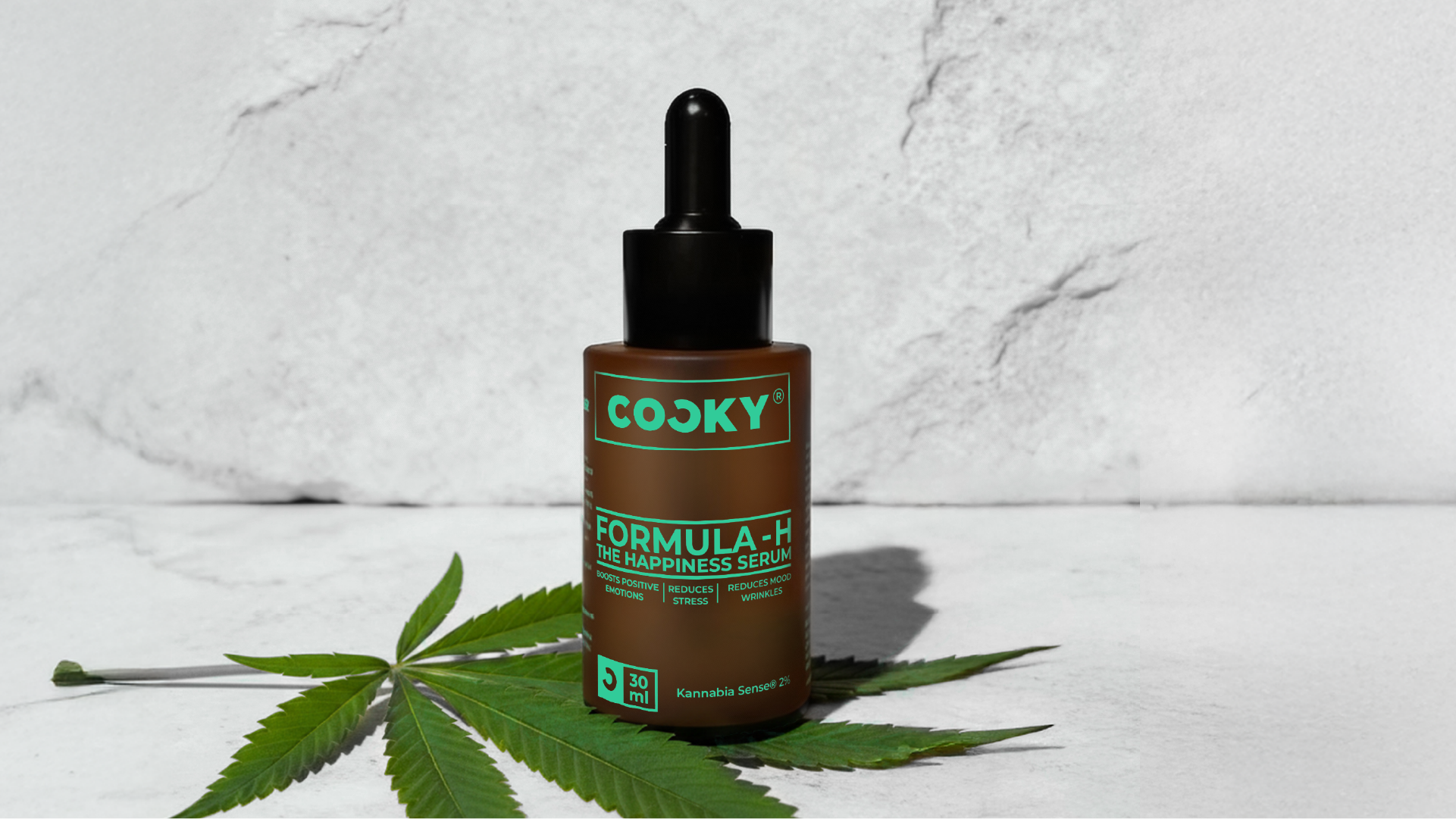
- Formula H is an Indian neurocosmetic face serum that contains a Spanish active ingredient called Kannabia Sense™.
A face serum that claims to lift your mood — not just your skin — is racking up views and raising eyebrows. We looked at Kannabia Sense™, the award-winning ingredient at its centre, and what the lab actually found.
It began, as these things often do, with a phone video. On an ordinary, aggravating morning in Bengaluru — a spilled coffee, a cab that never came, a work call that would usually sour the whole day — a woman filmed her husband simply… shrugging it off, and smiling. She posted the clip with a half-joking caption asking what, exactly, had gotten into him. Within days the replies had drifted away from the marriage and toward a small brown bottle visible on the shelf behind him.
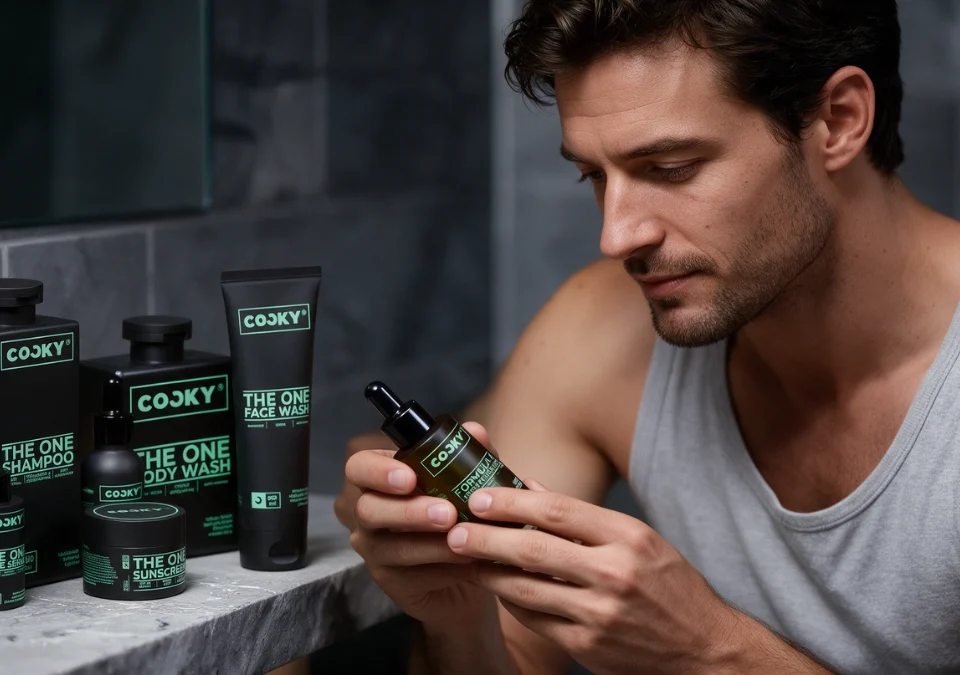
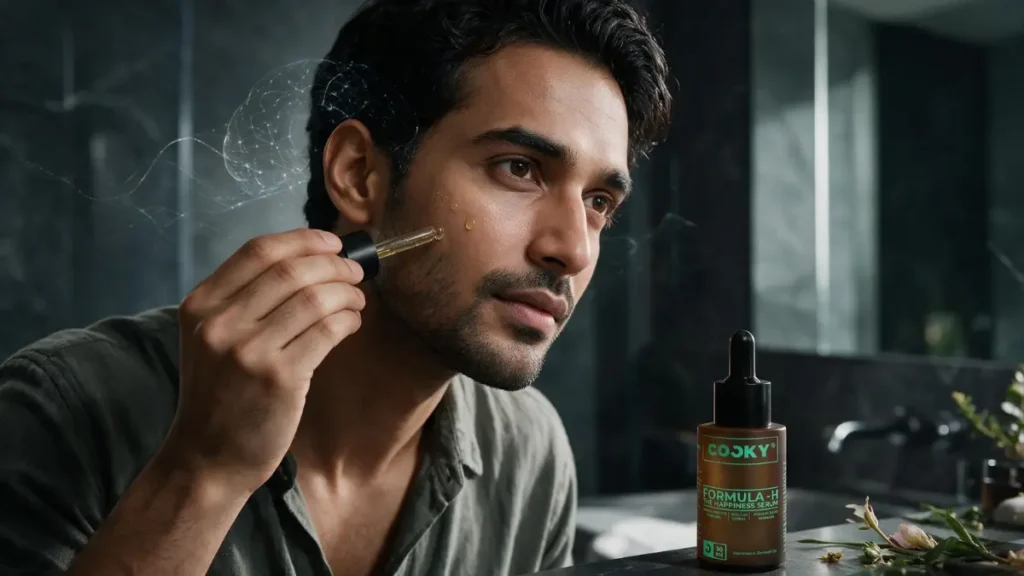
That bottle is Formula H, sold as “India’s first neurocosmetic” — a young category of skincare that claims to act not only on the skin but, through it, on the brain. It is the kind of claim that invites an eye-roll. But the ingredient at its heart, a Spanish active called Kannabia Sense™, arrives with an unusually thick folder of laboratory and clinical work — the sort of thing the magnesium-and-ashwagandha crowd tends to want before parting with ₹999. So we read it.
The serum’s launch has already been written up by outlets from Business Standard to The New Indian Express, largely on the novelty of the category. The more interesting question is the one beneath the headlines: can something you rub on your face genuinely change how you feel — and if so, how?
Your skin, the ‘third brain’
Start with a fact that sounds stranger than it is: your skin is a chemical factory. Beyond acting as a barrier, skin cells can make and respond to many of the same signalling molecules the brain uses — including oxytocin, the so-called ‘bonding’ or feel-good molecule released during touch, warmth and closeness. Scientists increasingly describe a “microbiota–skin–brain axis”: a two-way conversation between the trillions of microbes on your skin, the skin itself, and the nervous system. Neurocosmetics is the attempt to nudge that conversation deliberately, from the outside in.
How Kannabia Sense is meant to work
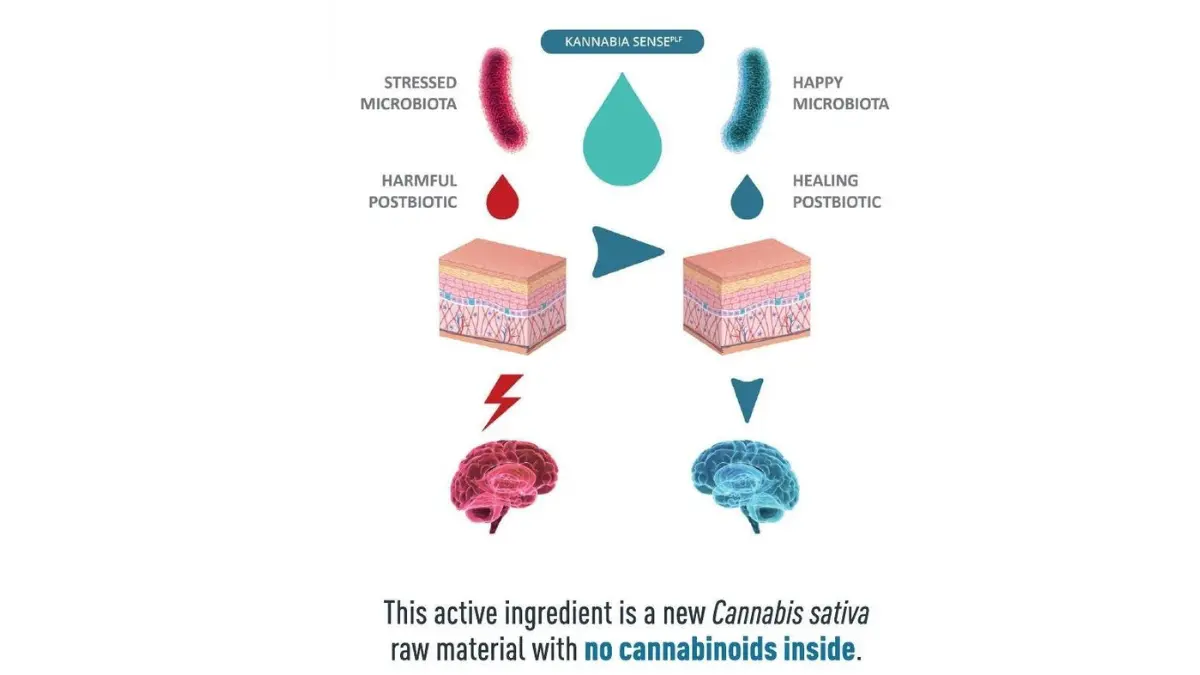
Kannabia Sense™, developed by the Spanish biotech Vytrus, is not a drug you absorb. It is closer to a prebiotic — food for the friendly bacteria already living on your skin. Fed with it, those microbes shift from a “stressed” to a “happy” state and produce a different set of by-products, or postbiotics. Those healing postbiotics, the company’s dossier argues, prompt skin cells to release oxytocin, which then signals the brain’s pleasure circuitry. Stress in; serenity out — molecule by molecule.
But isn’t this… cannabis?
The short answer is no. Kannabia Sense™ is derived from a new generation of Cannabis sativa stem cells, but the manufacturer states plainly that it contains no cannabinoids — no THC, no CBD. There is nothing in it to get you high, and nothing you swallow; it is a topical cosmetic. The cannabis lineage is about the plant’s cell chemistry, not its psychoactive reputation — a distinction worth keeping straight in a country where the word alone can end a conversation.
What the lab found
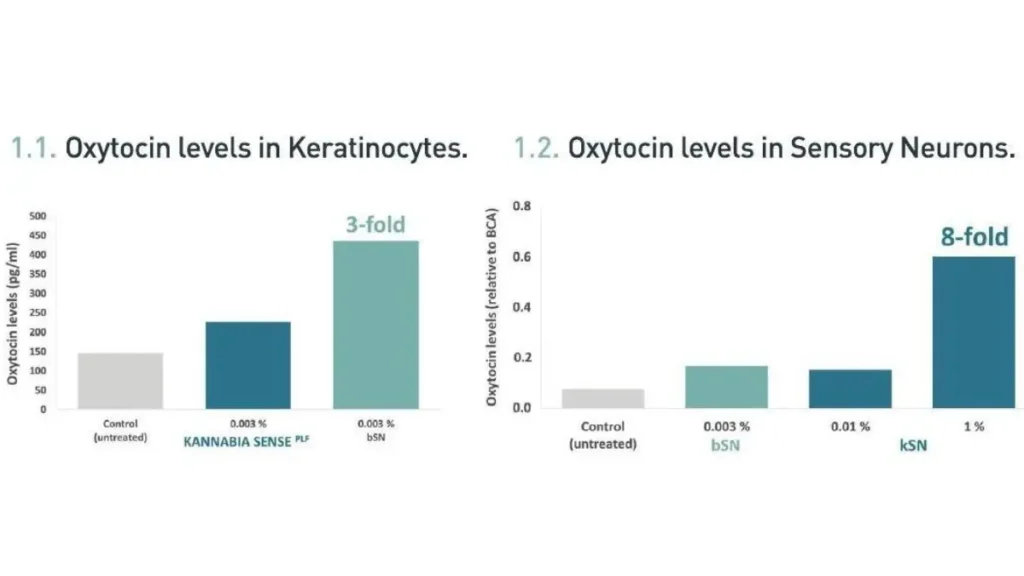
In cell studies, the effect on oxytocin was not subtle. Applied to human skin cells (keratinocytes), Kannabia Sense™ roughly tripled oxytocin production; in sensory-neuron models, the postbiotic-driven signal pushed it up as much as eight-fold. Alongside that, the ingredient behaved like a capable skincare active in its own right — mopping up oxidative stress and sharply dampening an inflammation-linked enzyme.
“The activation pattern looked much like the brain’s response to chocolate.”
The part that turns heads: the brain scans
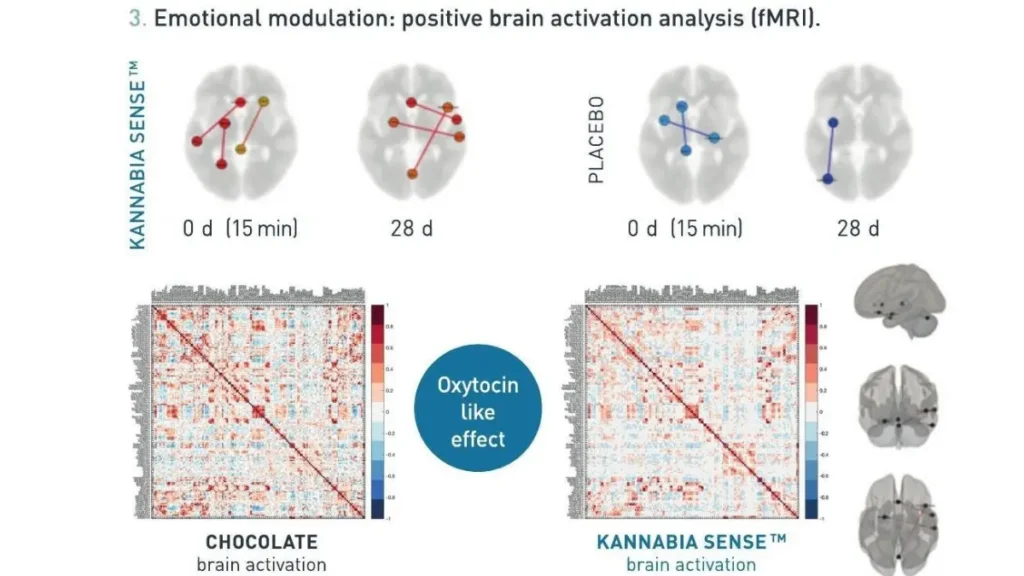
Cell studies are one thing; a living brain is another. So the ingredient was put through a functional-MRI study, imaging 132 brain regions in volunteers before and after use. Within fifteen minutes of a single application, pleasure-linked areas — the amygdala, insular cortex, hippocampus and anterior cingulate — showed increased activity, in a pattern researchers compared to the brain’s response to chocolate. Placebo did comparatively little. It is, the company notes, the first time such an effect has been claimed for a cosmetic.
And the mood, actually measured
To test feelings rather than firing neurons, the ingredient went into a 28-day double-blind, placebo-controlled trial. Volunteers were deliberately chosen for being stressed — screened on an anxiety questionnaire and by elevated cortisol in their saliva. Over four weeks, those using the active reported up to 29% more positive emotions — optimism, joy, cheerfulness, happiness — and described themselves as more relaxed, happier and more confident than the placebo group.
The skin, meanwhile, behaved. Hydration rose by more than half; the ‘mood wrinkles’ that stress carves between the brows and around the mouth — frown and marionette lines — shrank by up to a third in length and nearly half in area; and radiance improved by roughly a fifth.
So, does it work?
Here a little discipline is in order. These are results from studies on the ingredient, not a guarantee for any one person, and Formula H is a cosmetic — not a medicine, and no substitute for sleep, exercise, or professional help where those are needed. Mood is stubborn and multi-causal; no serum rewrites a hard week. What the evidence does suggest is more modest and more interesting: that a well-designed topical can measurably tilt the skin-to-brain conversation toward calm, and do respectable skincare while it is there. As with the magnesium on your nightstand, the fair test is a consistent one — the studies ran 28 days, and so should you before you judge it.
Formula H, the Indian serum built around Kannabia Sense™, is a 30 ml neurocosmetic , available at only ₹999 at cockylife.com.
Scientific figures and images in this article are reproduced from the Kannabia Sense™ technical dossier and clinical summaries (Vytrus Biotech, Spain). Formula H is a cosmetic product; the figures refer to independent studies on the active ingredient and individual results may vary. It is not a medicine and is not intended to diagnose, treat, cure or prevent any disease.