
Skincare Routine For Summer: How To Keep Skin Balanced When The Weather Is Not
February 9, 2026
Dark Spots On Face Causes: A Practical, Science-Led Guide For Men
February 17, 2026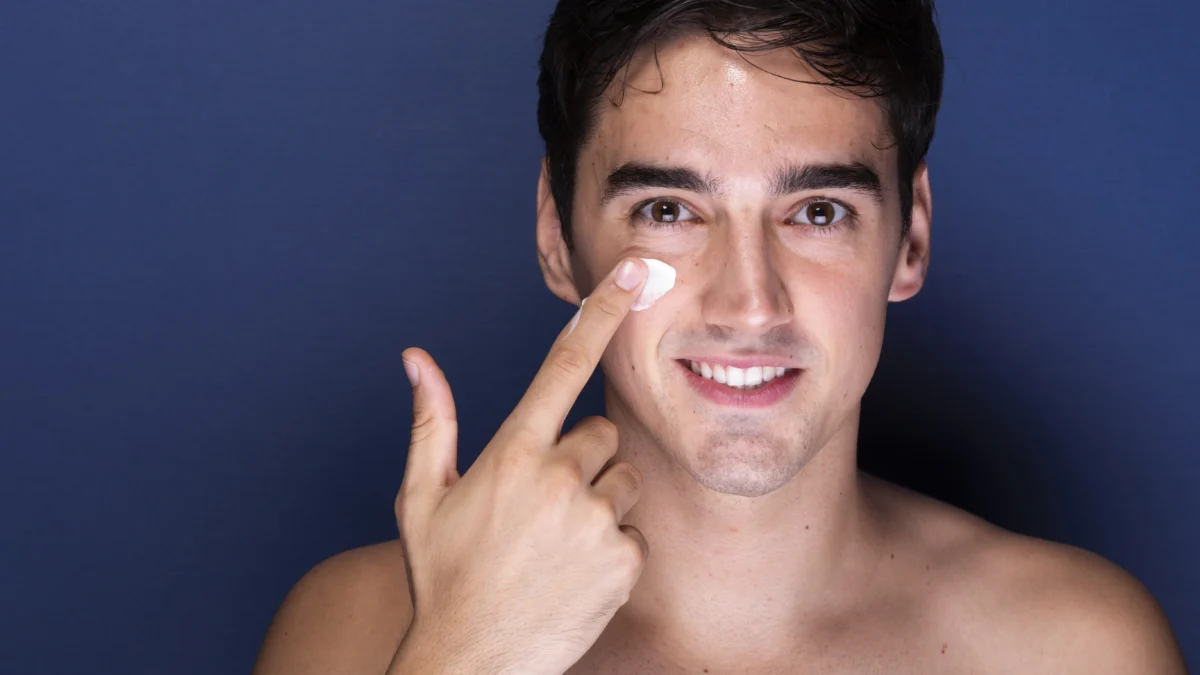
Let’s answer this straight away. If you’re using separate products, the correct order is moisturiser first and sunscreen second. So when people ask moisturiser or sunscreen first, the answer is moisturiser first, sunscreen last.
There is, however, an important exception.
If you’re using a 2-in-1 sunscreen that also works as a moisturiser, you don’t need a separate moisturiser underneath. In that case, that single product becomes your final morning step and completes your routine.
This blog explains both situations clearly, so you know exactly what to do based on your routine.
Why People Get Confused About Moisturiser And Sunscreen
Skincare advice online often feels contradictory. One person says sunscreen always comes last, another says moisturiser ruins SPF, and someone else suggests mixing both together.
The confusion usually comes from not understanding the difference between moisturizer and sunscreen. They are built for completely different jobs.
- Moisturiser supports hydration and skin comfort.
- Sunscreen protects your skin from UV exposure.
A moisturiser absorbs into the skin and helps support the barrier. Sunscreen, on the other hand, forms a protective layer on top using UV filters that must sit evenly across the surface to provide proper protection.
Once you understand this basic difference, deciding first sunscreen or moisturizer becomes much simpler.
Moisturiser Or Sunscreen First?
If you use two separate products, follow this order:
- Cleanser
- Moisturiser
- Sunscreen
This works because moisturiser needs direct contact with clean skin so it can sink in properly and support the barrier. Sunscreen needs to sit on top to form an even protective film, often through stabilised UV filter systems such as SunCat DE that help deliver broad-spectrum coverage.
If you apply moisturiser over sunscreen, you disturb that protective layer. Coverage becomes uneven and sun protection drops. So when someone asks what should I apply first moisturizer or sunscreen, the answer is always moisturiser first and sunscreen last.
What If Your Sunscreen Also Works As A Moisturiser?
This is where modern formulas change the routine.
Some sunscreens are designed to provide both hydration and UV protection in one step. If your sunscreen already contains moisturising ingredients and feels comfortable on your skin, you can skip a separate moisturiser.
In this case, your routine becomes:
- Cleanser
- Sunscreen (that also moisturises)
For example, Cocky The One Sunscreen is positioned as a daily-use sunscreen that also functions as a moisturiser. Along with SPF 50 PA++++ protection, it contains Pentavitin to provide long-lasting hydration, Vitamin B5 (Panthenol) to support the skin barrier, and Betaine to help maintain moisture balance. The formula also includes Tea Tree Extract, which helps keep skin feeling calm and fresh during daily wear.
Because it combines effective UV filters with hydrating ingredients in one formula, you don’t need to layer an extra cream underneath unless your skin feels very dry.
This approach works especially well for people who:
- Prefer a minimal routine
- Have oily or combination skin
- Want fewer layers in hot or humid weather
- Dislike heavy products in the morning
If your sunscreen already hydrates your skin comfortably, there is no need to complicate the routine further.
Difference Between Moisturizer And Sunscreen (Simple Explanation)
Let’s make this very clear.
Moisturiser
A moisturiser is designed to:
- Hydrate the skin
- Reduce dryness and tightness
- Support the skin barrier
- Improve overall comfort
Ingredients like Panthenol and Betaine are commonly used in moisturisers because they help attract and retain moisture within the skin.
Moisturisers mainly work inside the skin.
Sunscreen
A sunscreen is designed to:
- Protect against UV rays
- Reduce tanning and sunburn
- Help prevent premature ageing from sun exposure
- Shield skin from daily environmental stress
Sunscreen mainly works on top of the skin through UV filters that form a protective shield.
That’s the real difference between moisturizer and sunscreen. One treats the skin and the other protects it. A 2-in-1 product simply combines both functions in a single formula by pairing UV filters with hydrating ingredients like Pentavitin and Vitamin B5.
So… First Sunscreen Or Moisturizer? Let’s Break It Down
Here’s the easiest way to decide.
If you use separate products:
- Moisturiser first
- Sunscreen second
If your sunscreen also moisturises:
- Skip moisturiser
- Apply sunscreen directly on clean skin
The rule depends entirely on whether your sunscreen already provides enough hydration for your skin type.
How Long Should You Wait Between Layers?
If you’re using both moisturiser and sunscreen, wait about 30 to 60 seconds after applying moisturiser before moving on to sunscreen.
You don’t need long gaps. Just allow the moisturiser to settle slightly so sunscreen can sit evenly on top without mixing into it.
How Much Sunscreen Should You Apply?
Order matters, but quantity matters just as much.
For the face and neck, aim for roughly two finger-lengths of sunscreen. Most people use less than needed, which significantly reduces protection.
Apply it evenly and make sure you cover:
- Ears
- Neck
- Hairline
These areas are exposed to sunlight too and are often missed.
Skin-Type Guidance (Quick and Practical)
Even though the order stays the same, texture choice should match your skin type.
For oily or acne-prone skin, lightweight or gel-based sunscreens that also moisturise usually work well. Heavy creams can feel uncomfortable and reduce consistency.
For dry skin, you may still prefer a separate moisturiser under sunscreen unless your sunscreen provides enough comfort on its own.
For combination skin, use sunscreen evenly across the face and add moisturiser only on drier areas if needed.
For sensitive skin, stick to gentle formulas and avoid layering too many active products in the morning.
Common Mistakes That Reduce Sunscreen Effectiveness
These habits quietly undo your efforts:
- Applying sunscreen before moisturiser when using two products
- Mixing sunscreen into moisturiser
- Using too little sunscreen
- Skipping sunscreen on cloudy days
- Applying makeup before sunscreen
Avoiding these mistakes improves protection more than upgrading to expensive products.
Do You Still Need Sunscreen Indoors?
If you sit near windows or spend time in daylight, the answer is yes.
UVA rays can pass through glass and contribute to premature skin ageing. If natural light reaches your workspace, sunscreen still plays an important role in daily protection.
Moisturiser Or Sunscreen First (Quick Recap)
Let’s repeat the core rule clearly.
If you are using separate products:
- Moisturiser first
- Sunscreen last
If you are using a 2-in-1 sunscreen moisturiser:
- Sunscreen alone on clean skin
If you ever feel unsure, remember that products meant to absorb go first and products meant to protect go last.
Conclusion
If you’ve been confused about moisturiser or sunscreen first, the logic is simple.
Use moisturiser first and sunscreen second when they are separate. If your sunscreen already hydrates your skin, you can skip moisturiser and use just that one product.
Understanding the difference between moisturizer and sunscreen helps you build a routine that works instead of guessing every morning. And if you’re still asking what should I apply first moisturizer or sunscreen, the answer depends on your sunscreen formulation.
Consistency matters more than complexity.
FAQs
If you’re using two separate products, always apply moisturizer first and sunscreen second. Moisturizer hydrates your skin, while sunscreen needs to sit on top to form a protective layer. If your sunscreen already works as a moisturizer, you can apply it directly on clean skin and skip the separate moisturizer.
No. Applying cream or moisturizer after sunscreen can disturb the sunscreen layer and reduce protection. Sunscreen should always be the last step of your morning skincare routine before makeup.
Yes, if your sunscreen is formulated to provide hydration and skin comfort. Many modern sunscreens are designed to work as both moisturizer and sunscreen. In that case, you don’t need a separate moisturizer unless your skin feels dry or tight.